


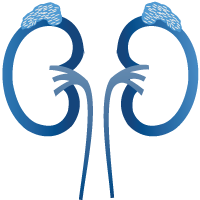



Lower back and flank pain often make it difficult for patients to understand whether the source of their discomfort is coming from the kidney or the spine. In particular, kidney stone pain and lumbar disc herniation pain may sometimes resemble each other.
If the distinction is not made correctly, unnecessary medication, delayed treatment, and prolonged health issues may occur.
For this reason, it is important to understand the differences between the two conditions.
When a kidney stone blocks the urinary tract, it stimulates the pain nerves and creates a sudden, wave-like, very severe pain pattern.
A herniated disc, however, presses on the spinal nerve roots and causes a movement-dependent, radiating, often chronic type of pain.
Correct diagnosis means correct treatment.
Pain Characteristics and Onset
Kidney stone pain starts suddenly, causing the patient to double over in agony.
The pain comes in waves, rises and falls like cramps, and usually does not allow the patient to sit comfortably; the person cannot find a relieving position.
Herniated disc pain usually starts more subtly, increases with sitting, and may ease when lying down.
Stone pain typically begins in the flank area and radiates toward the groin and may be accompanied by nausea and cold sweats.
Disc herniation pain is felt in the lower back and radiates down the leg like an electric shock. It may worsen with coughing or bending forward.
Even the onset pattern of these two pains provides important clues.

Accompanying Symptoms
In kidney stone pain:
- Blood in the urine
- Nausea and vomiting
- Frequent urination
- Burning sensation
- Pain that remains constant and does not ease with movement
may be seen.
In lumbar disc herniation:
- Numbness or tingling radiating down the leg
- Muscle weakness
- Stiffness in the lower back
- Pain that increases with spinal movements
is more prominent.
Both conditions can cause severe pain, but the accompanying symptoms clearly distinguish one from the other.
How Examination and Tests Are Performed
A urology specialist evaluates the kidneys and urinary tract; an orthopedist or neurosurgeon evaluates the spine.
In suspected kidney stones, ultrasound, urine analysis, and if needed, CT scanning are used.
MRI is the most important method in diagnosing disc herniation.
During examination, tenderness in the suspected kidney area supports the diagnosis of a stone, while nerve tension tests and altered leg reflexes support disc herniation.
Treatment Approach
Treatment of kidney stones is planned according to the size and location of the stone; water intake, painkillers, medications, ESWL, or endoscopic intervention may be required.
In disc herniation, rest, physical therapy, painkillers, muscle relaxants, exercises, and when necessary, micro-surgery are applied.
A wrong diagnosis means wrong treatment.
Therefore, distinguishing whether the pain is “coming from the kidney or the spine” must be done at the right time.
Although kidney- and spine-related pains may resemble each other, they can be differentiated with careful evaluation.
Severe flank pain accompanied by urinary symptoms points to the kidney;
pain radiating down the leg and worsening with movement points to the spine.
Pain is never without a reason; seeing the right specialist protects you from unnecessary tests and speeds up treatment.

You can fill out the form below to contact me, get information and make an appointment. Our coordinator will call you as soon as possible.